Why Counseling Belongs at Prairie Grit
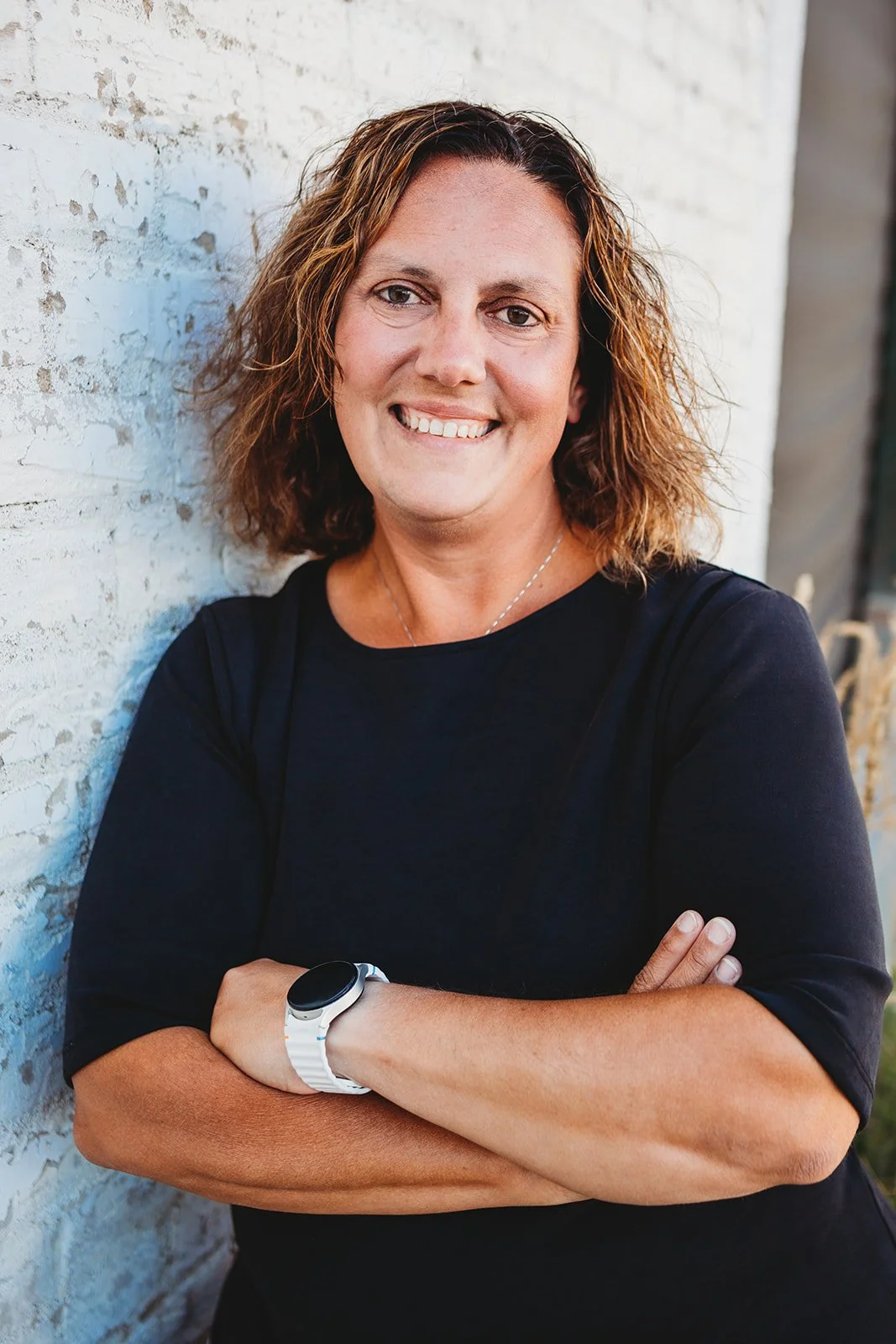
By Shelly Carbo, LCSW, Prairie Grit Therapy
Kids who come to Prairie Grit are already doing hard things. Great things, but difficult nonetheless.
They are working on skills that come easily to the kid sitting next to them at school. They are practicing something twenty times that another child got on the second try. They notice the differences. And sometimes, those experiences begin to affect how a child feels about themselves, school, or relationships.
That work has a cost, and it does not show up in a motor goal or a speech goal. It shows up as a child who has decided they are bad at things.
Completing the whole-child picture
OT, PT, and speech address important areas of a child's development and functioning, and they do that well. Counseling adds another piece, supporting the emotional, behavioral, and relational concerns that may affect a child across home, school, and friendships.
So, families would ask. My kid is making progress here, but he cries before school. She is doing great in speech, but she has no friends. He melts down every night over homework, and I do not know how to help him. Those are real problems, and they were landing on therapists who were not the right person to solve them.
A child's development is not divided into departments. Their life is not either.
Why the same building matters
For families, getting help shouldn't have to mean starting over. Access is most of what determines whether a family follows through.
A parent who is told to find a counselor somewhere else has to research providers, call around, check insurance, get on a waitlist, and then walk a nervous child into an unfamiliar building. A lot of families stop somewhere in the middle of that, and it is not because they did not care.
At Prairie Grit, mental health counseling can be a part of an environment many children and families already know and trust. The building is familiar. The front desk knows their name. The child has already decided this is a place where people help.
One team, with your permission
Having services in the same organization also creates opportunities for collaboration. When you sign a release, the people working with your child can talk to each other.
Your OT can tell me what regulation looks like in her session. I can tell your speech therapist what is happening with friendships at school. That coordination is difficult to arrange across organizations; however, it is straightforward with Prairie Grit. Each professional remains within their own area of expertise, but everyone can work toward a shared goal: Helping the child function and feel better in everyday life.
What I actually do
I am a Licensed Clinical Social Worker. I provide individual counseling, family therapy, and couples therapy, working with children, adolescents, adults, and families.
Right now, my caseload focuses on pediatric patients.
With younger children, I use play-based interventions, creative activities, emotional regulation skills, and coping strategies. Play is how children of that age process things they do not yet have words for. It is the method, not a warm-up.
To be clear about one thing, because the language gets used loosely: I provide counseling that uses play based interventions. I am not a play therapist, and I do not provide play therapy.
What families come in for
Big emotions that are hard to manage at home or at school
Low confidence, and a child who has started saying they are bad at everything
School struggles that go past the academics
Friendship problems and trouble connecting with peers
Family changes, including moves, separation, and new households
Grief
Trouble adjusting when something in a child's world shifts
Everyday skills that are harder for this child than they should be
You don't need to know what diagnosis your child may have or even whether they have one before reaching out. We can start by talking about what you are noticing and determine whether counseling may be appropriate.
Counseling is not only for when things fall apart
The most common thing I hear is that a family was not sure it was bad enough to call.
Waiting until it is bad enough means starting from a harder place. A child who is starting to withdraw is easier to help than a child who has been withdrawn for two years, and the work is shorter.
You do not need a reason that sounds serious. Something feels off and I want help with it is a reason.
How to start
Getting an appointment
Call and ask about counseling services. Referrals and coverage vary by insurance plan and our team can help determine what is needed.
We accept most major insurance.
Services are located inside the Minot Family YMCA.
Your child does not need to be an existing Prairie Grit patient. Counseling is open to anyone.
If your child already receives therapy here, ask about signing a release so the team can coordinate.
If you are unsure whether counseling is the right fit, call and ask. A conversation costs you nothing and I would rather point you somewhere else than have you wait.
If this is an emergency
Counseling appointments are not the right first step during a crisis.
If your child is in immediate danger, call 911.
For urgent mental health support at any hour, call or text 988 to reach the Suicide and Crisis Lifeline.
The short version
Prairie Grit already works on how a child moves, communicates, and manages daily life.
Counseling addresses what a child carries while doing all of that. Mental Health belongs here because the children are already here and because the different parts of a child's development don't operate separately from one another.
If something feels off, you don't have to wait for a crisis to reach out. Starting the conversation is reason enough.
About the author
Shelly Carbo, LCSW, earned her Master of Social Work from Arizona State University and is a Licensed Clinical Social Worker. She works with children, adolescents, adults, and families. Her approach is strengths-based, family-centered, and focused on building resilience and healthy coping skills. She works to create a safe, supportive environment where clients can work through challenges and reach meaningful goals. Outside the clinic, Shelly is usually at one of her kids' sporting events, watching Minotauros hockey, or making memories with the people she loves.
Prairie Grit Therapy is located inside the Minot Family YMCA in Minot, North Dakota. This article is general information and is not a substitute for evaluation by a qualified provider.